
Understanding ADHD in Children: Helping Every Child Feel Seen and Supported
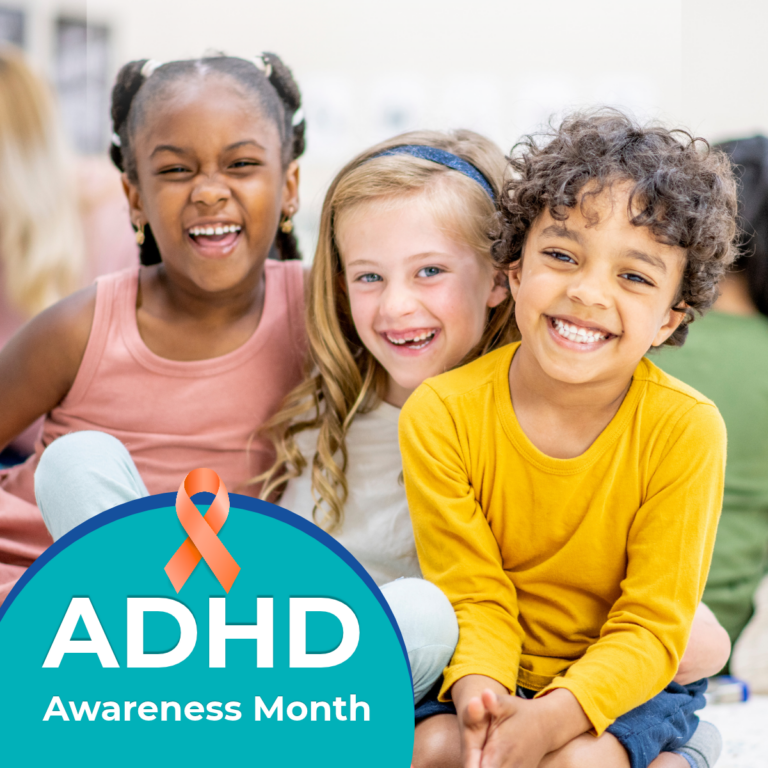
During ADHD Awareness Month in October, we can educate families, educators, and behavioral health professionals about ADHD while addressing misconceptions that can delay diagnosis and limit access to appropriate services.
What Does ADHD Look Like in Children?
Attention-deficit/hyperactivity disorder, or ADHD, is a neurodevelopmental disorder that can affect attention, activity levels, organization, and impulse control. Although symptoms begin in childhood, ADHD can continue into adolescence and adulthood.
ADHD does not look the same in every child. One child may quietly lose track of directions, forget materials, or struggle to begin a project. Another may move constantly, interrupt, or act before thinking. These challenges can affect everyday routines, learning, friendships, and emotional well-being.
According to the Centers for Disease Control and Prevention, a 2024 national survey of parents estimated that approximately 7 million U.S. children ages 3–17 had a current ADHD diagnosis. Behind that number are children with individual strengths, experiences, and support needs.
Look Beyond the Behavior
An unfinished assignment or repeated interruption can lead adults to assume a child is careless, unmotivated, or deliberately disruptive. Those assumptions can overlook the effort a child is making to stay focused, manage frustration, or follow directions.
A more useful starting point is to ask: What is making this difficult, and what support could help?
This question invites curiosity without jumping to a diagnosis. Difficulty sitting still or sustaining attention does not automatically mean a child has ADHD. Understanding the reasons behind a behavior is essential to choosing the right response.
Why a Careful ADHD Evaluation Matters
There is no single test that confirms ADHD. A qualified healthcare professional considers the child’s developmental history, gathers information from multiple sources, and looks at how symptoms affect everyday life.
An evaluation includes observations from caregivers and educators, along with the child’s perspective when appropriate. Diagnostic criteria require persistent symptoms that are inappropriate for the child’s developmental level, occur in more than one setting, and interfere with functioning. Several symptoms must have been present before age 12.
This process also considers other possible explanations, including anxiety, trauma-related symptoms, sleep difficulties, and learning disorders. ADHD can also occur alongside other conditions, including autism spectrum disorder.
A thorough assessment helps families and professionals understand the child more fully and identify support that fits.
What Can ADHD Treatment and Support Include?
Effective support is individualized and may involve behavioral interventions, educational accommodations, and medication. Treatment decisions should reflect the child’s age and needs, with guidance from their healthcare provider.
The American Academy of Pediatrics recommends parent training in behavior management and behavioral classroom interventions as initial approaches for preschool-aged children. For school-aged children and adolescents, recommendations include medication alongside behavioral interventions and appropriate school supports.
Collaboration matters throughout this process. Families may notice difficult transitions at home, while educators may identify when a child’s attention fades or which classroom approaches help. Healthcare and behavioral health professionals can connect those observations and guide treatment.
Families also need access to culturally responsive services and consistent care. Understanding barriers to assessment and treatment is key to helping children get the support they need.
Everyday Ways to Support a Child with ADHD
Alongside an individualized care plan, families and educators can work together on practical strategies:
- Create predictable routines. Help children know what to expect and prepare for transitions.
- Make directions manageable. Break larger tasks into smaller steps and check for understanding.
- Recognize effort and progress. Offer specific encouragement that acknowledges what the child is doing well.
- Allow movement and brief breaks. Build opportunities to reset into learning and daily routines.
- Keep communication open. Share observations among families, educators, and care providers, and listen to the child’s experience.
No single strategy works for every child. Support should be adjusted as the team learns what helps the child participate, build skills, and experience success.
If concerns persist, sharing specific examples with the child’s healthcare provider and school can help start a conversation about evaluation and support.
How CCRN Supports Children and Families
At CCRN Educational & Behavioral Support Services, our commitment to individualized behavioral interventions and collaborative educational support reflects the importance of addressing each child’s unique strengths and developmental needs. As behavioral health professionals, we must continue advocating for accurate assessments, evidence-based interventions, and access to quality services for all children and families.
ADHD should never define an individual’s intelligence, character, or potential. Rather, understanding the disorder provides an opportunity to identify appropriate strategies and create environments that promote positive developmental outcomes. Awareness is only the beginning. Meaningful change occurs when education, clinical understanding, and individualized support work together.
ADHD should never define an individual’s intelligence, character, or potential.
Awareness is a starting point. Meaningful change happens when we replace quick judgments with curiosity, connect clinical understanding with practical support, and recognize children’s strengths as clearly as their challenges.
Every child deserves the opportunity to feel understood, supported, and ready to grow.
Explore CCRN’s educational and behavioral support services.
